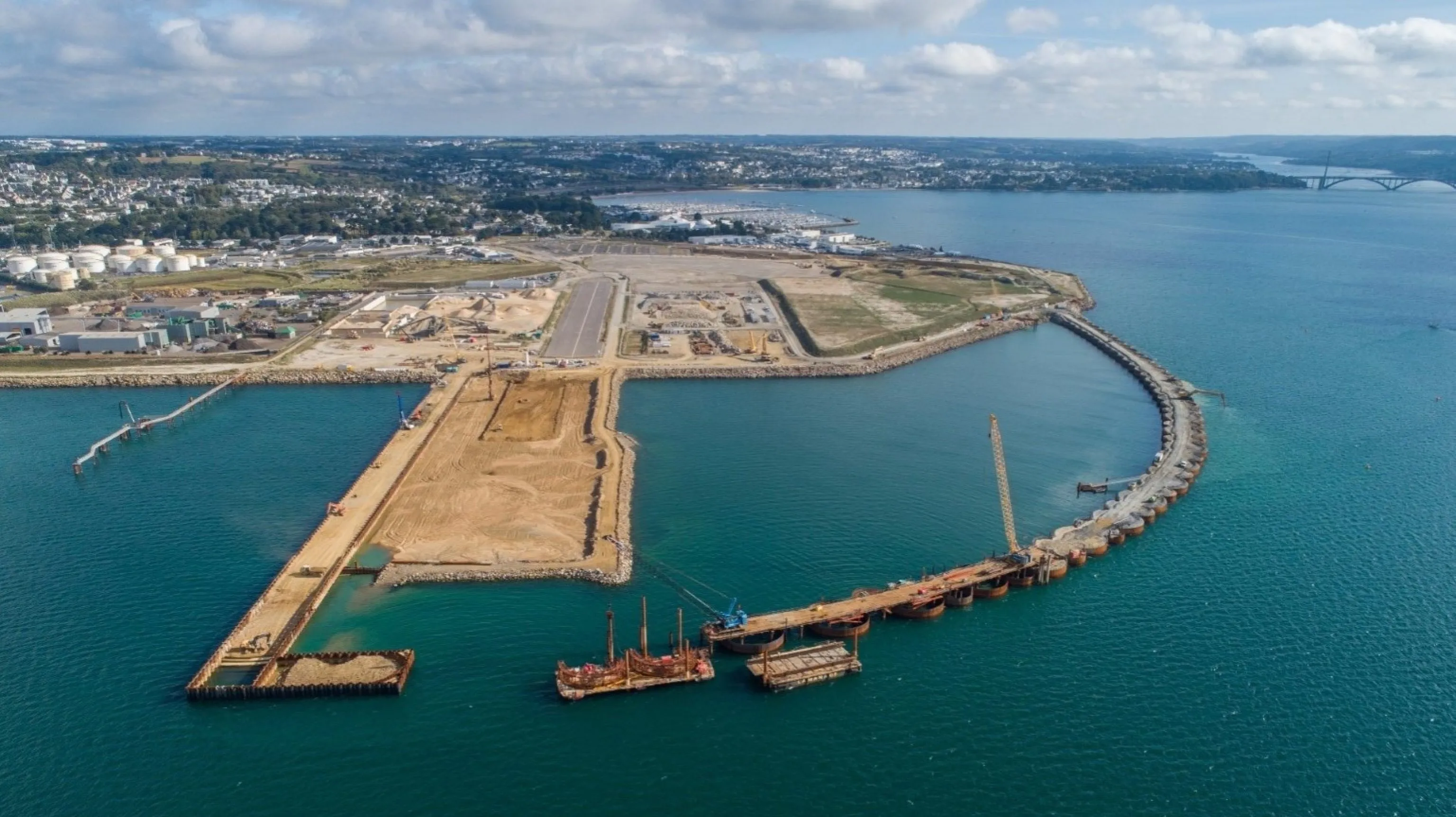
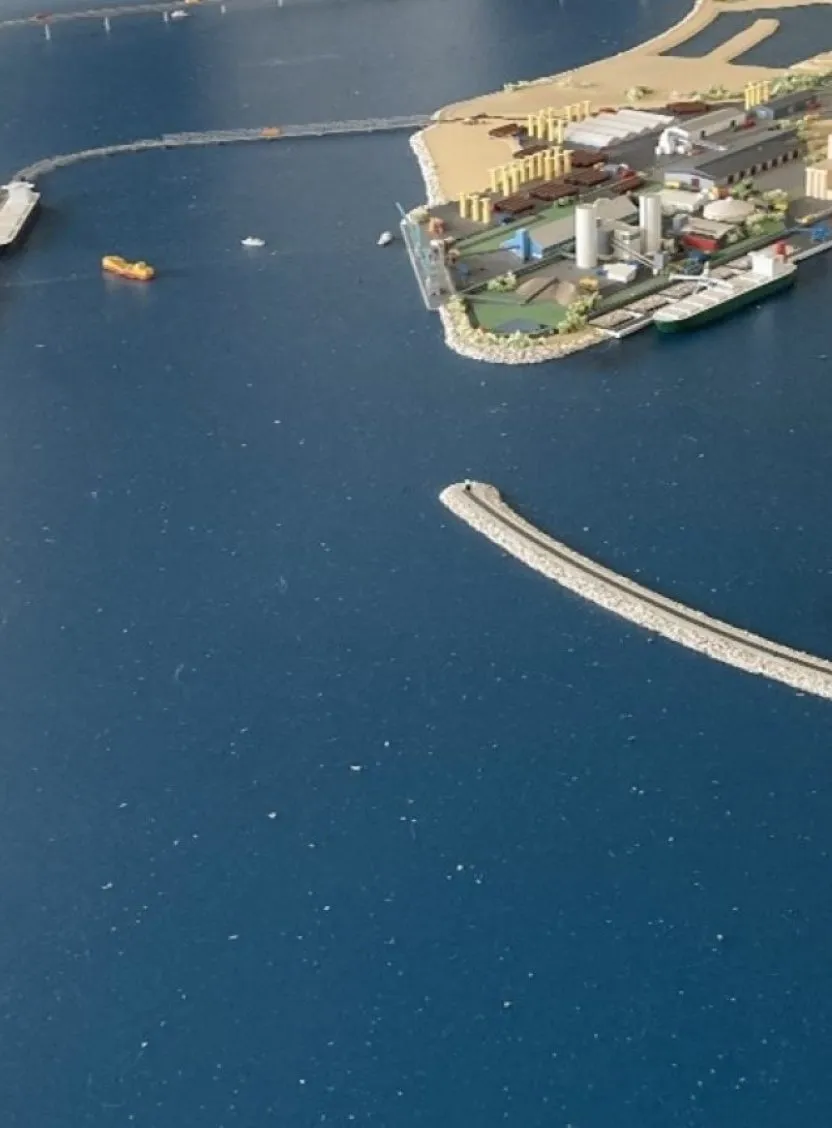
Brest Port launched the InFloW project to establish itself as a leading player in the wind energy sector, with a particular focus on floating offshore wind turbines. The production process is divided into five main stages:
- Stage 1: Transhipment of floater and wind turbine components
- Stage 2: Terminal layout for manufacturing steel and concrete floaters
- Stage 3: Launching and load-out of floaters
- Stage 4: Wet storage of floaters and wind turbines
- Stage 5: Integration of the wind turbine at the Brest site
The first phase of InFloW involved a multi-criteria analysis—technical, economic, and environmental—of various solutions for each production stage. The second phase explored different development scenarios by combining some of the solutions identified earlier. The scheduling of French wind farm projects, especially AO5 (which had not yet been awarded at the time), was a decisive factor in this analysis:
- Stage 1 – Horizon 2029: Investments made before AO5, depending on the maximum infrastructure capacity to be determined; steel or concrete floaters.
- Stage 2 – Horizon 2032: Investments made after AO5, depending on the turbine type targeted in phase 1; steel or concrete floaters.
The project was managed in two phases and required a broad range of expertise, including port operations, logistics, offshore engineering, structural, geotechnical, and environmental engineering. Several setec subsidiaries (setec tpi, setec offshore wind, terrasol, setec énergies environnement) were involved, supported by external partners (Narval Solutions, FlowIndus, Geoz-consulting).
With the support of a panel of experts whose skills complemented those of setec—particularly in port logistics for offshore wind—the studies delivered the following outcomes:
- Summary of input data: existing infrastructure, wind farm projects, assumptions on floating wind turbines and floater types
- Identification of logistical schemes for producing steel and concrete floaters
- Technical feasibility studies for required geotechnical and structural reinforcements
- Environmental impact analysis of proposed solutions
- CAPEX estimates and project scheduling
- Layout plans for port facilities