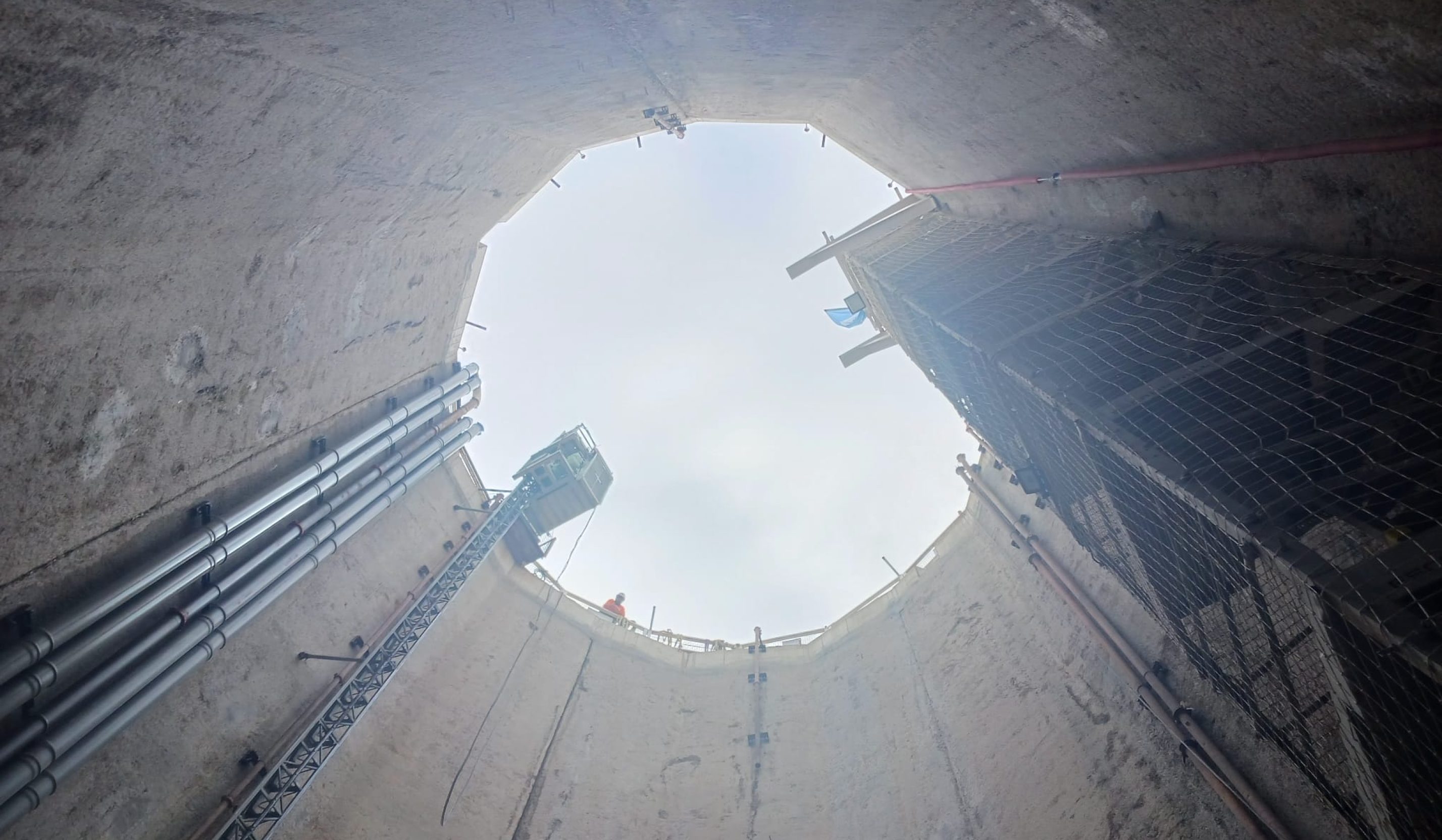
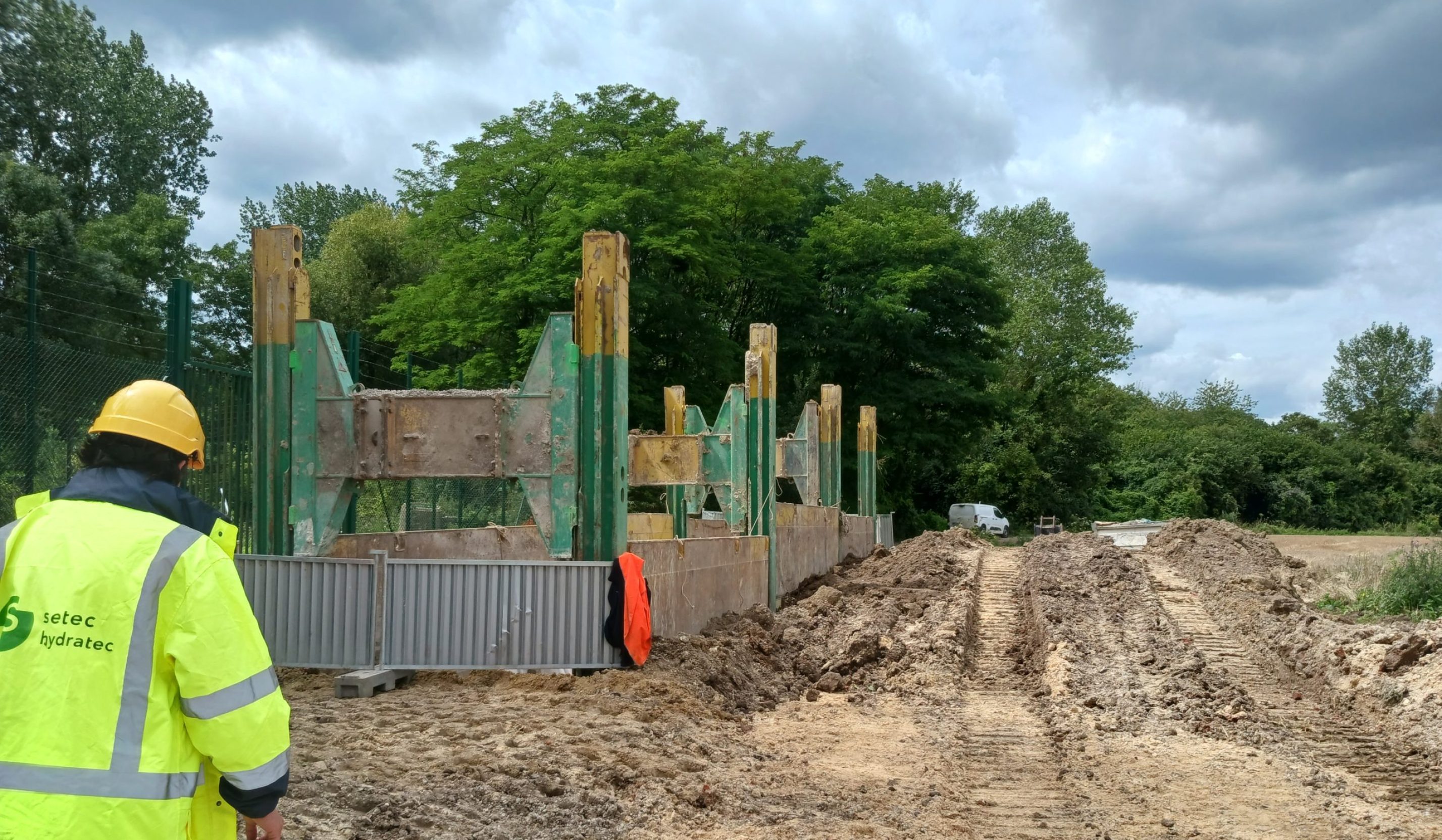
Canal de Mer is a hydraulic infrastructure project led by setec for the Aéroports de Paris group, aiming to secure the management of treated rainwater from the Paris-Charles de Gaulle platform through a transfer pipeline to the Marne. This large-scale project, at the interface of technical challenges and significant environmental preservation stakes, is presented here through the insights of Imane KASSA, a hydraulic structures engineer and project manager at setec hydratec.
A project for the quality of discharges
Originally, some of the treated stormwater from the ADP platform was discharged into a small watercourse (the Reneuse). With increasing flow rates and environmental protection requirements, ADP decided to implement a transfer pipe to redirect these discharges to the Marne, a larger capacity watercourse.
A design-build operation and a multidisciplinary collective
Canamarne was carried out as part of a design-build contract. On the design side, setec hydratec (project manager appointed by the client, mentioned in the interview) worked in a joint venture with Cabinet Merlin. The project is part of a larger consortium, including in particular the construction companies SADE and NGE. Specialised skills were also mobilised, notably those of setec terrasol (Geotechnical / G4 mission during works phase) and Biotope (environmental support).
Key figures and technical choices
« The project involves 9.4 km of transfer pipe, with diameters ranging from 1,000 to 1,800 mm, enabling the gravity flow of treated stormwater from the airport platform to the Marne, etc. The design flow rate reaches 1.8 m³/s, with a particularly low gradient of around 0.2 % ,” specifies Imane. The route combines open-trench sequences and sections using the Microtunnel trenchless technique, with numerous associated civil engineering structures (shafts, manholes, monitoring stations).”
Environmental issues: intervening in forests and wetlands
One of the key features of Canamarne is the fragility of the environments it passes through: forests, wetlands and the presence of protected species. Imane emphasises the importance of using appropriate methodologies to minimise impacts during the construction phase, oversee works and ensure restoration that is consistent with conservation objectives. “The most significant aspect is working in sensitive environments: forests, wetlands, and the protection of endangered species, etc. Our interventions must be carefully planned, and we must be very rigorous in the restoration process.”
Feedback: Team coordination and dynamics
Beyond the technical aspects, the organisation was a challenge in itself: multiplicity of stakeholders, sequencing of phases, and coordination between execution methods. At times, the project brought together over 100 people (management and production teams). For Imane, the most memorable moment remains: ” this collective dimension, as well as rapid integration into an already structured project team, enabling it to effectively fulfil the role of project manager on the project side. setec hydratec, in collaboration with my colleague Benjamin Destison, Project Director. “