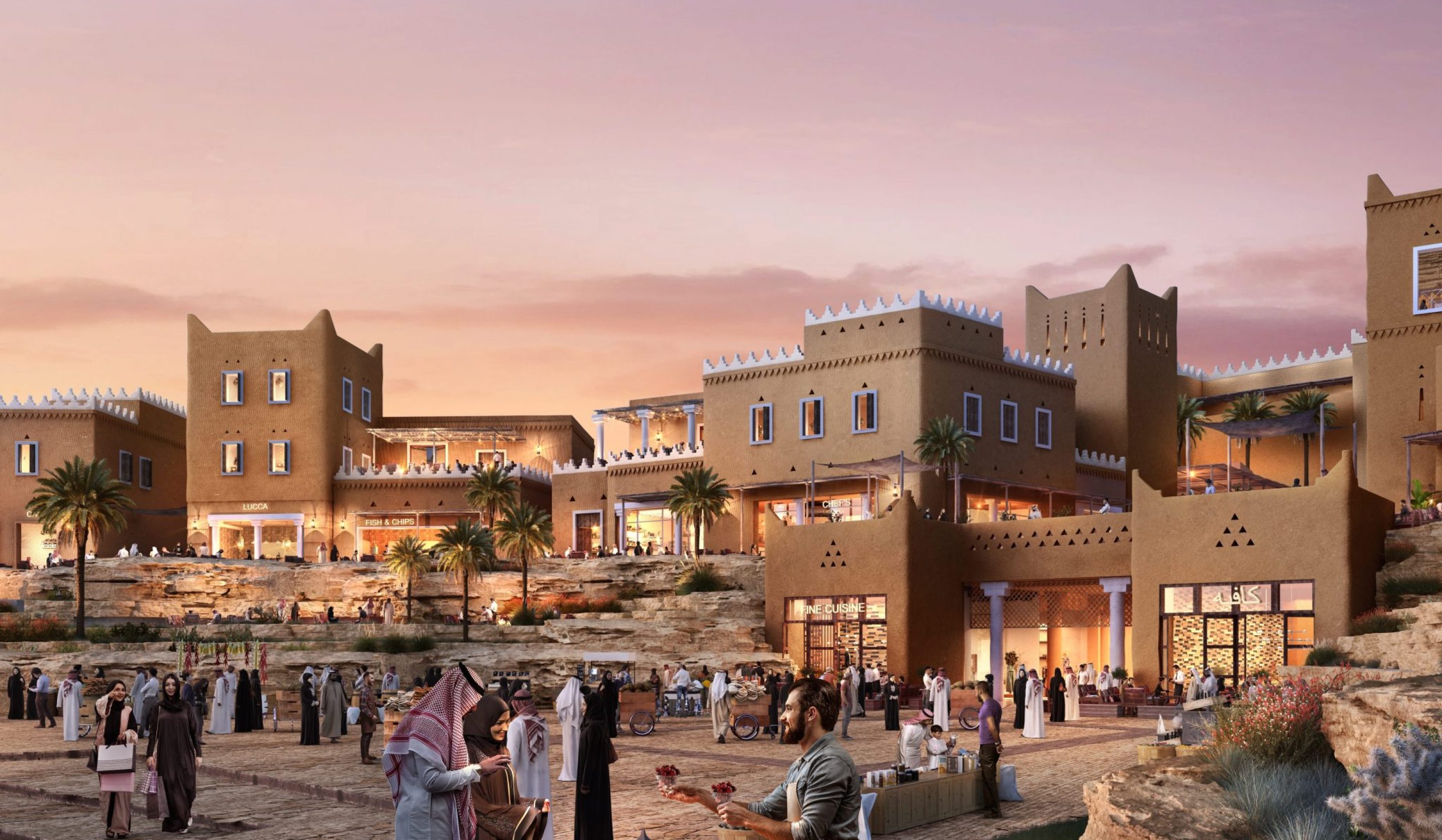
At Diriyah Gate in Saudi Arabia, sustainability is an intentional design choice. This project demonstrates how the use of traditional materials, combined with rigorously applied engineering, reduces the project’s environmental footprint whilst meeting contemporary requirements.
Ibrahim Elzanaty, Director Design Management at setec KSA
An emblematic project of Saudi Arabia’s Vision 2030
Located in Diriyah, the Kingdom’s first capital city more than 300 years ago, this major project aims to transform a UNESCO World Heritage Site into a cultural and tourist hub of international stature.
Beyond its sheer scale, Diriyah Gate carries a strong symbolic significance. “The ambition is not to recreate the past, but to bring it back to life,” explains Ibrahim Elzanaty, Director of Design Management at setec KSA. The architecture draws inspiration from the traditional Najdi style to preserve the site’s identity, whilst incorporating contemporary uses and demanding technical standards.
setec was involved in the Diriyah Gate South Cultural District as a project management consultant, working in a joint venture with Egis. “Our role was not to design the buildings, but to manage and oversee the entire engineering process on behalf of the client,” explains Ibrahim. The teams coordinated numerous international designers and supported the project from the conceptual phases through to the detailed design stage.
Resource sustainability, an integral feature of the project
The use of traditional materials, such as mud bricks and local limestone, was a key feature throughout the programme. “These materials have a low carbon footprint and excellent thermal performance,” emphasises Ibrahim.
This sustainability is also the result of exceptional methodological discipline. Each building underwent as many as twelve successive review stages, covering costs, material usage, carbon efficiency and overall performance. “Nothing was approved without demonstrating that the project met these criteria. This level of demand is rare, but it ensures that no resources are wasted.”
According to Ibrahim, Diriyah Gate embodies a sense of simplicity based on precision and discipline. “The challenge was to produce buildings with a traditional appearance, whilst meeting current standards for safety, comfort and performance.”
Key figures
- Expected visitors: over 25 million per year by 2030
- Residential capacity: over 100,000 residents
- Area: 14 km² of mixed-use development
- Energy efficiency and carbon reduction: the project incorporates measures to reduce energy requirements right from the building design stage, with the aim of achieving net zero.