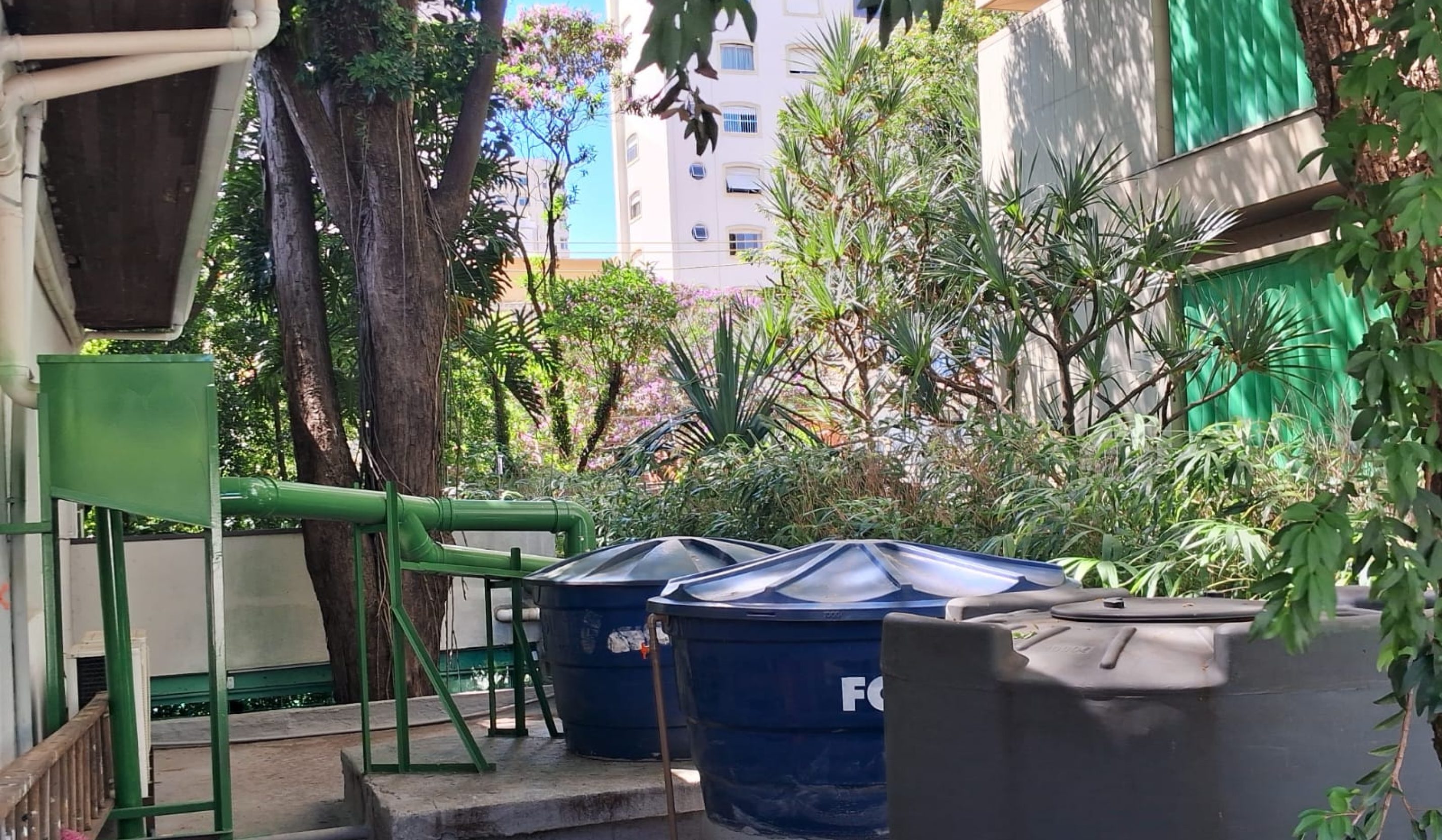
Faced with the water crisis in Brazil and the challenges associated with economical use of resources, setec is implementing a practical solution to save water: the reuse of rainwater. A local, sustainable and circular project that adapts usage to actual needs, reduces drinking water consumption and enhances the resilience of buildings. Experience shared by Daniel Augusto, civil engineer at setec hidrobrasileira.
When water restrictions become a motivation for action
The rainwater reuse project originated from a collective brainstorming session held during a Climate Fresco workshop organised with employees of setec hidrobrasileira. Among the measures proposed to reduce the building’s environmental footprint, rainwater recovery was identified as a local, practical solution with a direct impact.
This initiative comes at a time when Brazil is experiencing recurrent episodes of drought, such as that of 2014–2015, which severely affected the water supply. Faced with the risk of further water shortages, the project addresses the need to protect water supplies and adapt to climate change.
Transforming a natural resource into a practical solution
At the headquarters of setec hidrobrasileira, a fully integrated system collects rainwater from the building’s roof, filters it, channels it to storage tanks and redistributes it for uses that do not require drinking-quality water.
Prior to the tanks, a filtration system removes the main contaminants, whilst controlled chlorination ensures microbiological safety during storage.
The building’s water system has been adapted to separate drinking water from rainwater. Rainwater is now used for sanitary facilities, cleaning outdoor areas and irrigation, whilst water from the mains supply is reserved for essential uses.
A circular approach to building resilience
By replacing part of the treated water consumed with a free and renewable resource, the system reduces the use of drinking water by 30 to 40 per cent during the rain season. This approach eases the pressure on water resources in the São Paulo metropolitan area and reduces the energy required to treat them.
In addition to the savings generated, the project enhances the building’s water security and is fully in line with the principles of the circular economy, by recovering a resource that is usually discharged into the urban drainage network and reintegrating it into the building’s water cycle.
“By aligning water use with actual needs, the project demonstrates that small changes to infrastructure can have a lasting impact in terms of water efficiency and resilience. At setec, we encourage dialogue and innovation so that, together, we can tackle climate and environmental challenges,” concludes Daniel Augusto.