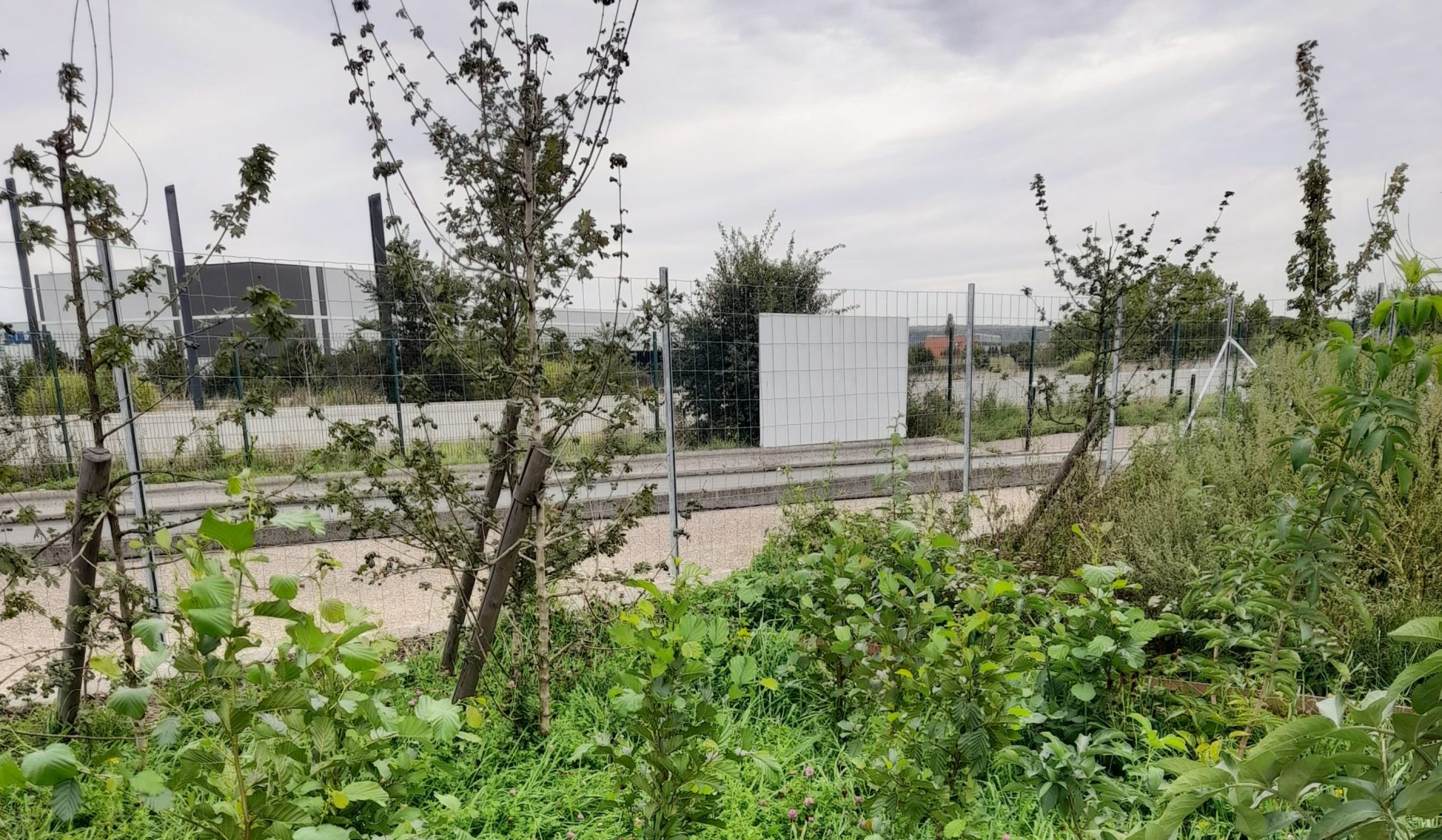
Restoring fertile land on the site of former roads and toll booths: this is the project being led by setec on behalf of Sanef, as part of the transition to free-flow traffic on the A13.
Between Paris and Normandy, the dismantling of the A13 motorway toll booths and associated infrastructure is allowing 28 hectares to be returned to nature. The Sanef motorway group has commissioned setec to experiment with creating fertile soil on part of these sealed surfaces, before launching a larger-scale regeneration programme. “The aim was to adopt a resource-efficient approach, avoiding the import of topsoil from agricultural land. Our proposal was to organise soil treatment on-site, incorporating inert materials from the demolition work to also limit outbound waste flows,” explains Xavier Fresneau, project manager at setec international.
Organic inputs
Two pilot sites have been identified: Buchelay in the Yvelines, and Dozulé in Calvados. After stripping and removing the asphalt and bituminous layers, the setec teams are reworking the existing soil, which consists mainly of inert excavated material. This work involves adding compost produced from green waste to the top 30 cm layer. “These additions provide the nutrients necessary for plant growth. To design these mixtures, we carried out analyses to determine the physico-chemical behaviour of the existing materials and adjust the percentage of compost,” explains Floréane Liège, a research engineer at setec lerm.
Local resources
Over a period of one and a half years, several formulations were tested to determine the mixtures best suited to each site. “We also checked the compost production capacities of local producers: soil regeneration will require significant volumes, so the idea is to work within a short supply chain to improve the carbon footprint of the project,” reports Lina Bouvet, ICPE Project Manager – Environmental Assessment at setec énergie environnement.
Four sites soon to be under construction
By 2025, the results of the trial had enabled the regeneration programme to be extended to a total of four sites. Responsible for drafting the technical specifications for the works contract, the setec teams were able to draw up recommendations for each of these sites regarding compost amendments, the mixing process and the phasing of planting: work is due to start in the summer of 2026.